Thermal control in biogas and biomethane plants | Energy efficiency
The development of biomethane in Spain has gone from being a promising prospect to becoming an industrial reality, driven by initiatives such as REPowerEU and by the targets set out in the National Energy and Climate Plan (PNIEC). Spain has one of the greatest biomethane production potentials in Europe thanks to the availability of agricultural, livestock, agro-industrial and municipal waste, an essential resource for moving towards a circular economy model and reducing dependence on fossil fuels.
This development is already becoming visible in the market. While in 2021 there was only one biomethane plant in operation, by early 2026 there were already 23 operational facilities, with a combined capacity of approximately 1.4 TWh per year. The PNIEC itself sets a target of reaching 20 TWh of biogas production by 2030, a figure that highlights the considerable growth potential that still exists in this market.
However, the sector’s next challenge is no longer simply to produce more biomethane. As plants reach greater technological maturity, their competitiveness will increasingly depend on how efficiently the available energy is managed, reducing consumption and making the most of the energy resources generated throughout the process.
In this context, there is one aspect that, although it tends to receive less attention than digesters or upgrading technologies, affects the performance of virtually the entire facility: thermal control.
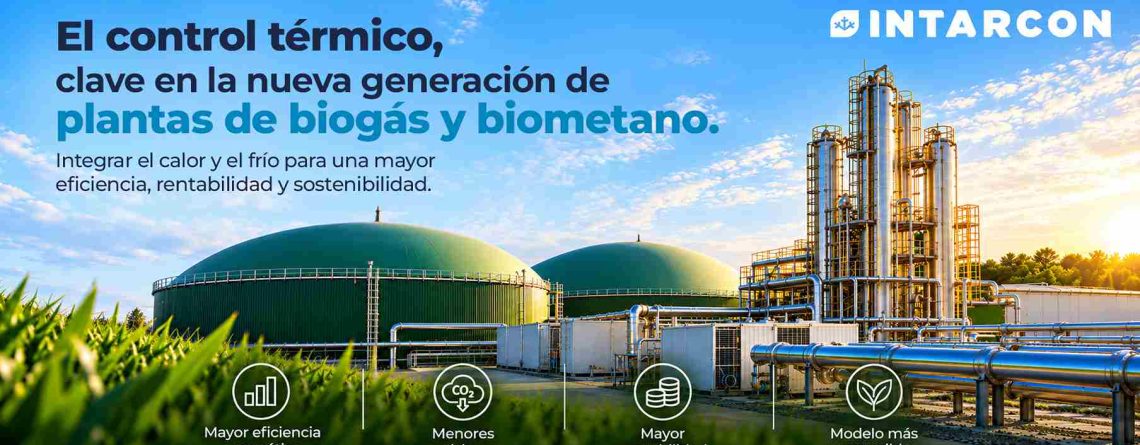
The evolution of biogas plants is no longer simply about increasing production, but about intelligently managing thermal energy throughout the facility. From this perspective, temperature is no longer merely a process variable; it becomes a strategic design variable capable of determining the plant’s efficiency, process stability and profitability.
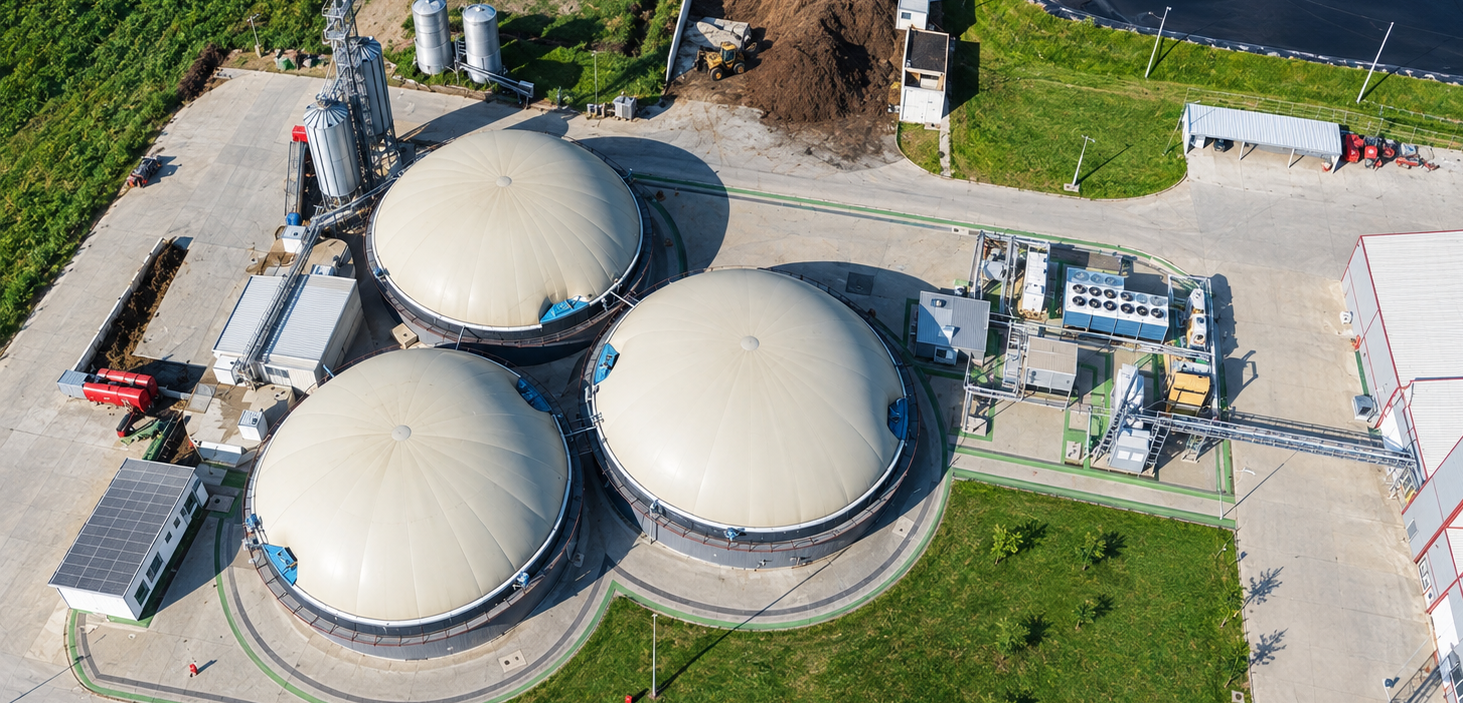
Temperature as a Strategic Design Variable
Virtually every stage of a biogas plant depends on proper temperature control.
Anaerobic digestion is the most obvious example. The activity of the microorganisms responsible for converting organic matter into biogas requires stable thermal conditions to be maintained in both mesophilic and thermophilic processes. Precise temperature control promotes the biological stability of the digester, increases biogas production and reduces the risk of process deviations.
Traditionally, this heating has been provided by boilers fuelled by fossil fuels or by a portion of the biogas generated by the plant itself. However, the progressive electrification of plants is encouraging the use of industrial heat pumps, which can provide the required thermal energy with much greater efficiency while making use of heat sources available within the facility itself.
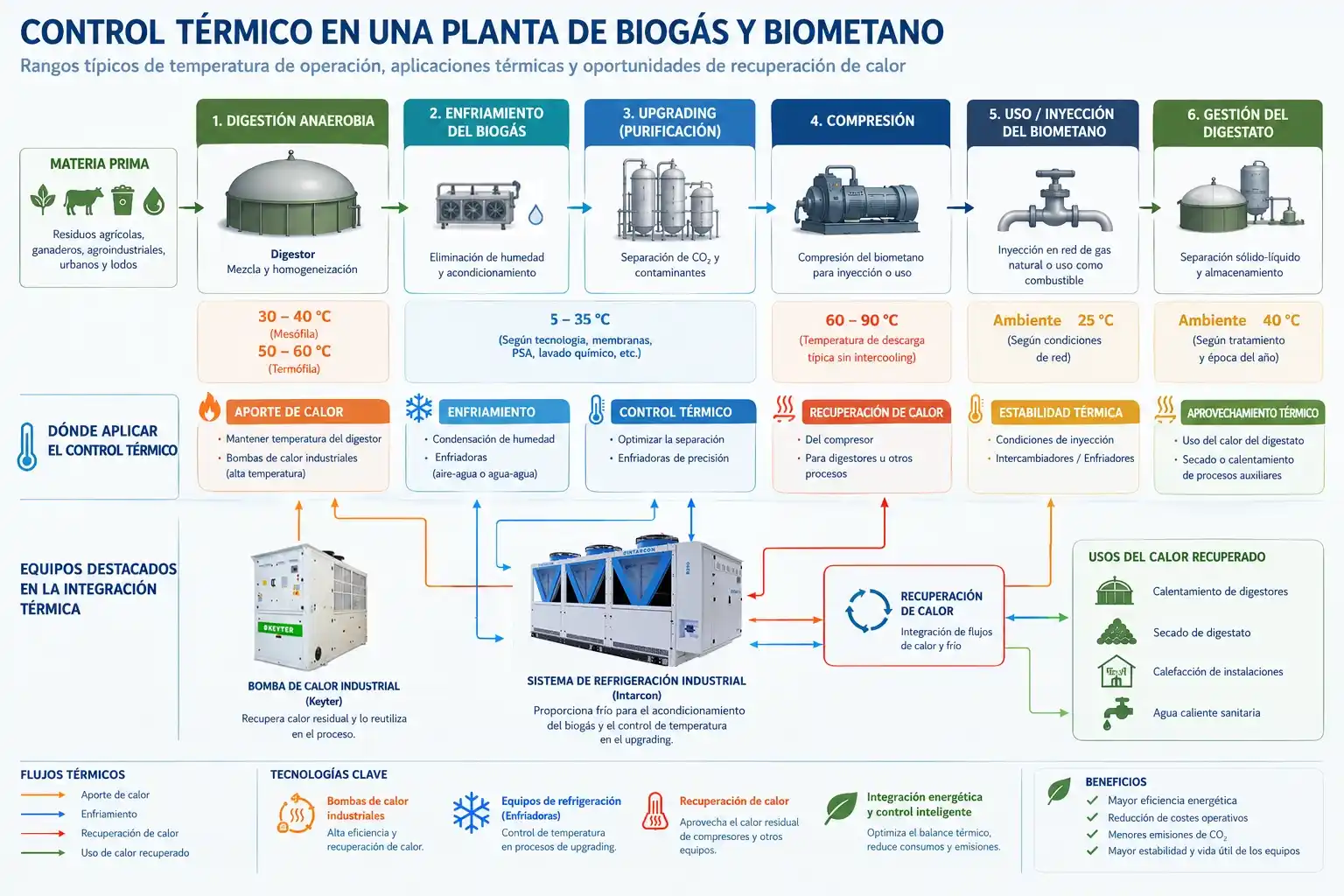
Thermal control is equally important during biogas conditioning and purification. Pre-cooling allows moisture to be removed through condensation, helping to prevent corrosion problems and protect downstream equipment. Later, during the upgrading process, in which carbon dioxide and other unwanted compounds are removed to obtain high-quality biomethane, temperature has a direct influence on separation efficiency.
Once the biomethane has been produced, compression is another stage where thermal control is essential. The temperature rise associated with increasing pressure reduces compressor efficiency and accelerates equipment wear when adequate cooling is not provided. Proper thermal design helps reduce energy consumption and improve the overall reliability of the facility.
Energy Integration
For years, heating and cooling systems have been designed to meet the specific requirements of each individual process. However, new plants are moving towards a much more efficient model in which heating and cooling are no longer managed separately but are integrated into a single energy system.
Each process either generates or requires thermal energy. Biogas compression produces waste heat; the refrigeration equipment required for processes such as upgrading also generates waste heat; while digesters require heat to maintain their biological activity. Integrating these energy flows will make it possible to recover energy that was previously wasted and reuse it wherever it is needed.
In this context, industrial heat pumps and refrigeration systems using natural refrigerants are taking on a key role, as they make it possible to recover waste heat and return it to the process, reducing both energy consumption and the emissions associated with plant operation.
The objective is no longer simply to maintain a specific temperature, but to optimise the facility’s overall energy balance.

Towards More Efficient and Intelligent Plants
Technological developments in the sector are reinforcing this trend. The electrification of thermal processes, energy management and the digitalisation of control systems are transforming the design of new biogas and biomethane plants.
Continuous monitoring of process variables makes it possible to optimise equipment operation, anticipate operational deviations and reduce operating costs through predictive maintenance strategies. At the same time, energy integration improves the plant’s overall efficiency and helps reduce its carbon footprint.
Conclusion
In recent years, the development of biomethane has focused on increasing production capacity and improving digestion and upgrading technologies. However, the sector’s next stage of development will be shaped by a less visible but equally decisive factor: intelligent thermal energy management.
Heating and cooling will no longer be regarded merely as auxiliary services, but as energy resources that must be integrated and utilised within a single system.
The future of biogas plants will therefore depend not only on producing more biomethane, but also on managing the energy available at every stage of the process more effectively. In this new scenario, thermal control is becoming one of the key pillars on which the next generation of biogas and biomethane plants will be designed and operated.
Article by Pedro Espinar. Hydrogen and Energy Market Engineer at Keyter Group (Keyter, Intarcon and Genaq).